

How to Survive in the Woods
A comprehensive step-by-step wilderness survival guide covering shelter, water, food, fire-building, signaling, and navigation.
Tomislav Lovrić
Military Veteran & Survival Expert
Getting lost in the wilderness — surrounded by wild animals, exposed to the elements, and running low on supplies — is a genuine survival scenario that occurs more often than people expect. Basic skills like shelter-building, foraging, and navigation can be the deciding factor between survival and tragedy. This guide is a comprehensive, step-by-step walkthrough covering shelter, water, food, fire-building, signaling, and navigation.
First Things First
- DON’T PANIC
- CONTACT EMERGENCY SERVICES FIRST (IF ABLE)
- DON’T EAT FOODS YOU CAN’T IDENTIFY AS SAFE
- BUILD A SHELTER AND START A FIRE
- DON’T LEAVE AN AREA OTHERS MAY BE LOOKING FOR YOU IN (UNLESS IT BECOMES UNSAFE)
- BE CAREFUL WHEN COLLECTING WATER, ALWAYS DISINFECT BEFORE DRINKING
Immediate Safety
Before thinking about long-term priorities such as shelter construction, assess your immediate safety. Once you realize you’re lost, instead of jumping straight into a full survival mindset, first ensure that you’re not in any sort of danger at the moment.
Examples of immediate dangers and appropriate responses:
- Storms: Finding natural shelter from rain and wind should be the top priority.
- Injuries from falls: If you tumbled down a slope while hiking, your first priority should be performing a medical check and treating any wounds.
- Dangerous wildlife: If you’re near a cougar, bear, or wild boars, removing yourself from that situation is the obvious priority.
Contacting Emergency Services
Once you are safe and past the initial shock, the next thing you should always do is call emergency services. Mountain rescue services are highly effective, and in the vast majority of cases where people become lost in the woods, the situation ends with rescue teams locating them and bringing them home quickly.
The core scenario for the rest of this guide: your cell phone is dead, and you must now rely on your own survival skills.
Shelter, Water, Food (In That Order)
Shelter, water, and food are the three essential pillars of survival. When lost in the woods, prioritizing these three needs — building shelter, locating drinkable water, and foraging or hunting — is paramount. Accomplishing these tasks is less daunting than it appears.
Humans are the most intelligent animals on the planet. Constructing a basic shelter and sourcing sustenance doesn’t require genius-level ability. Shelter is the top priority because a person can survive weeks (or even months, depending on body size) without food, and can go a day or two without water. In extreme cases, survival without water has been documented for up to ten days, so there’s no cause for immediate panic if water isn’t instantly available.
Warning: Exposure to wind, rain, and snow can lead to illness or hypothermia, which can be a death sentence if you can’t get medical attention. Always establish shelter first, then move on to finding water and food.
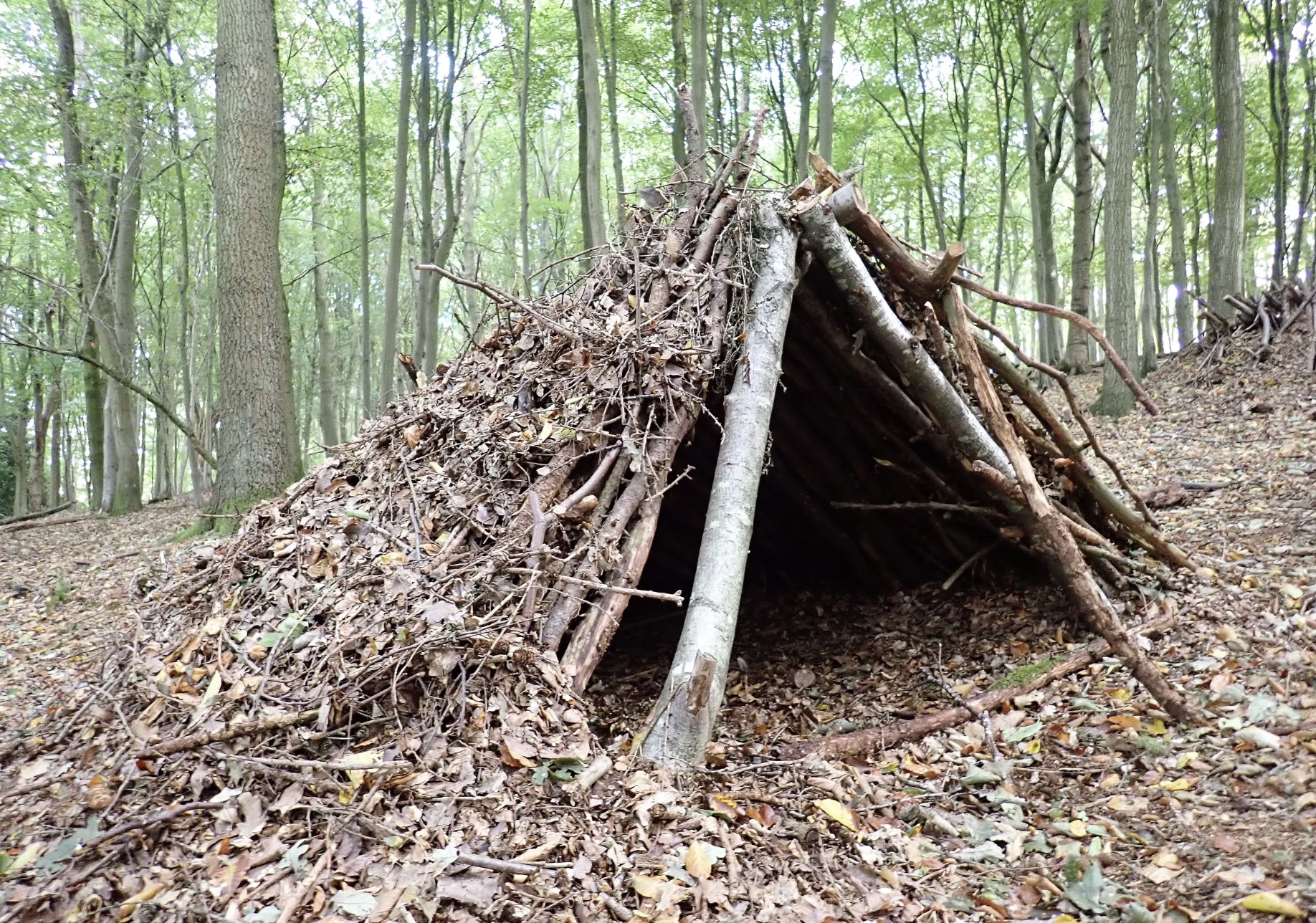
How to Build a Shelter
Choosing a Location — The Three Ws
The three Ws for site selection are: wind, water, and widow-makers.
Wind
Protection from wind is essential. Natural features such as rocks, cliffs, caves, and large trees can serve as effective windbreaks.
Caves — A Warning
While caves might seem appealing, avoid venturing into deep caves for two reasons:
- Unknown inhabitants — bears frequently use caves for rest.
- Carbon dioxide accumulation — some caves accumulate carbon dioxide from infiltrating waters, which can be lethal. Air quality can be tested with a lighter or matches — flame needs oxygen to burn, so if there’s no light, there’s no oxygen.
Tip: Shallow indentations in cliffs and mountainsides are recommended as safer alternatives to deep caves.
Water Proximity
Building near a water source is convenient since hydration is a constant need. However, in an emergency, closeness to water should not be prioritized over immediate shelter concerns.
Tip: Water proximity is only important for a long-term shelter!
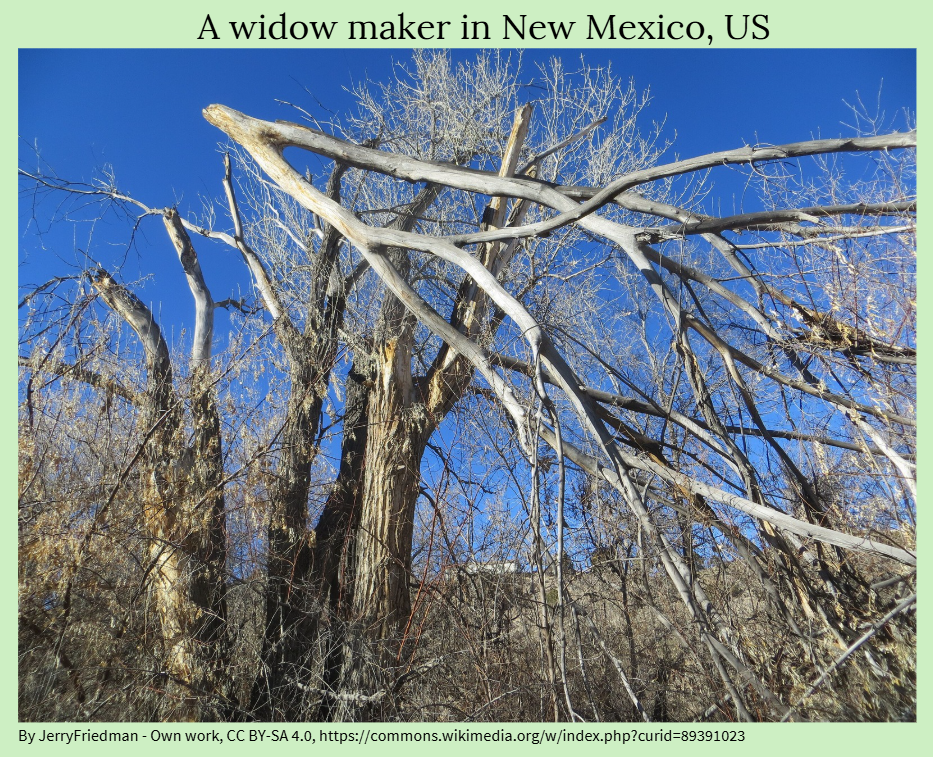
Widow-Makers
Widow-makers are partially dead branches that can be dislodged by strong winds. Because they are heavy and fall from height, they pose a serious lethal risk. Always scan overhead for these hazards when choosing a shelter site.
Finding and Disinfecting Water
Locating Water
-
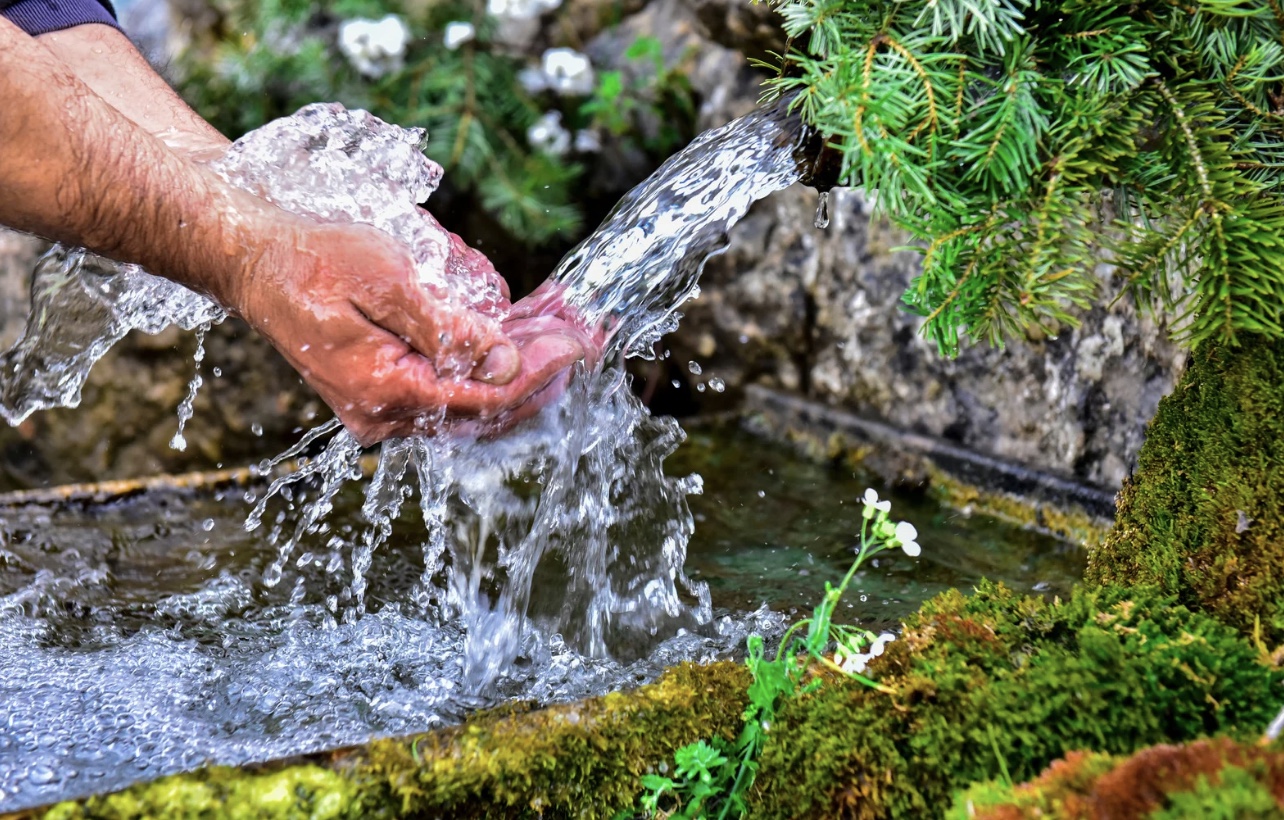
Step 1: Finding streams, rivers, or lakes through observation. Animals stay near water, and vegetation grows more densely around water sources. Birds frequently fly toward water, and insects tend to gather near fresh water. Avoid lake water since still water usually has more bacteria, viruses, and parasites.
-
Step 2: Rainwater and snow collection. Snow can be boiled down to water, and rainwater can be caught using containers such as bottles, kettles, pots, or improvised vessels made from tarp or plastic sheeting.
-
Step 3: Condensation trapping using a dark plastic sheet wrapped loosely around a plant or branch. The plant transpires moisture that collects on the plastic’s interior. This is a passive method that doesn’t harm the plant.
-
Step 4: Underground water sources can be accessed by digging approximately half a meter (about 1.5 feet) deep in muddy areas. If muddy water fills the hole, an underground source exists and the water needs filtering.
Tip: When collecting from an outdoor source like a stream, use a clean container, wash hands beforehand, and choose a spot near the source or at higher elevations away from animal grazing areas.
The Filtering Debate
The common warning about never drinking unfiltered wilderness water is somewhat exaggerated. While filtering is always recommended, dehydrating yourself rather than drinking unfiltered water is unreasonable. Dr. Troy Madsen, an emergency room physician, discusses “the immediate danger of severe dehydration versus the risk of an infection that’s not going to hit you for one to two weeks.”
The conclusion: always filter when possible, but drink unfiltered water if facing severe dehydration.
Tip: If many animals drink from the same water source, that typically indicates safety. Animals won’t return to sources that sicken them.
Building an Improvised Water Filter
The recommended approach is carrying a water filter as standard outdoor gear. Without one, an improvised filter can be built:
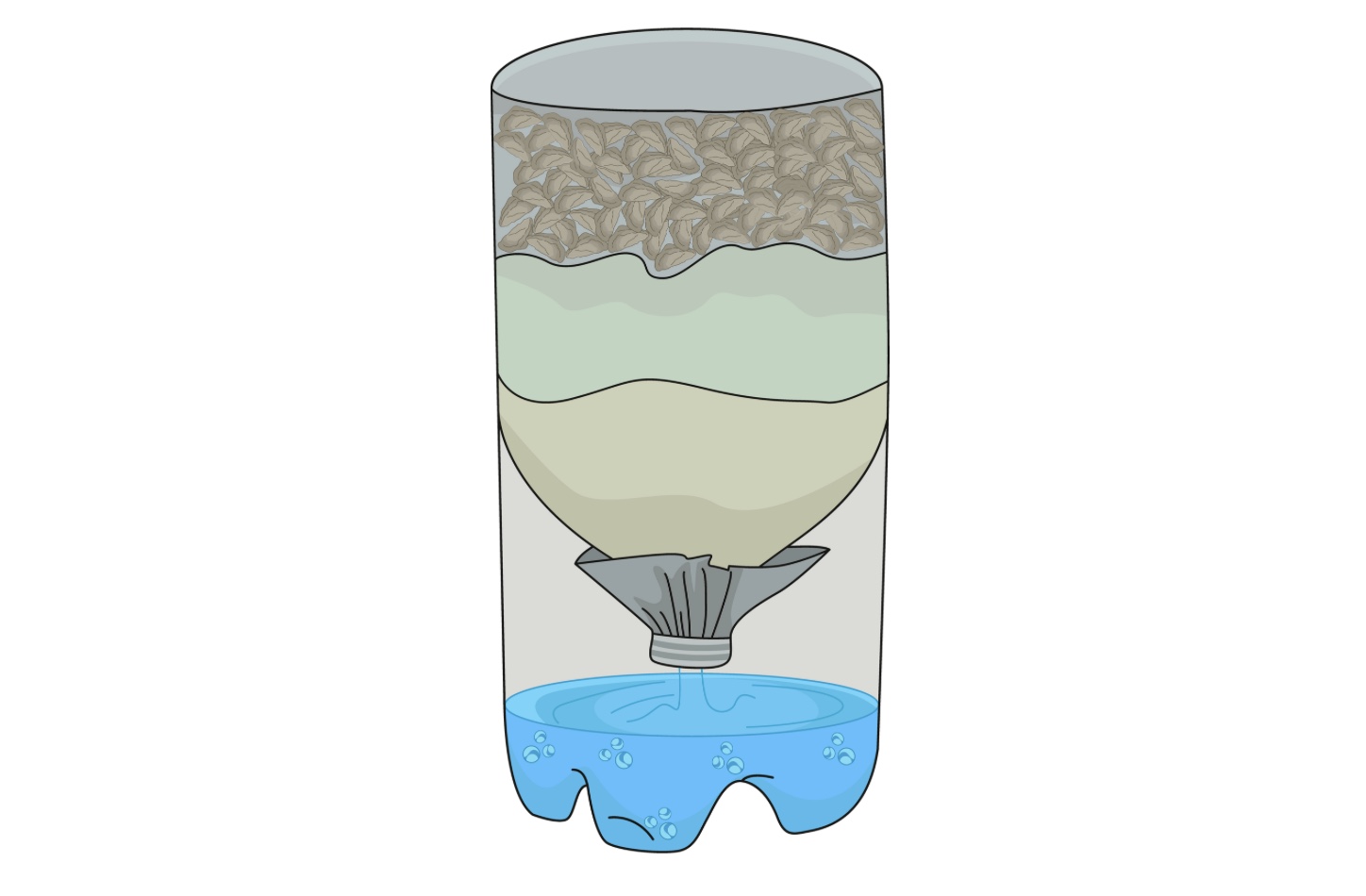
- Cut the top off a plastic bottle and invert it to create a funnel, with the cap opening pointing downward inside the bottle.
- Place a piece of cloth at the bottom of the funnel.
- Layer gravel and rocks (smallest at the bottom, largest at top), washed in a stream first. Add charcoal if available.
- Pour water slowly through the filter to catch dirt on the rocks.
After Filtering
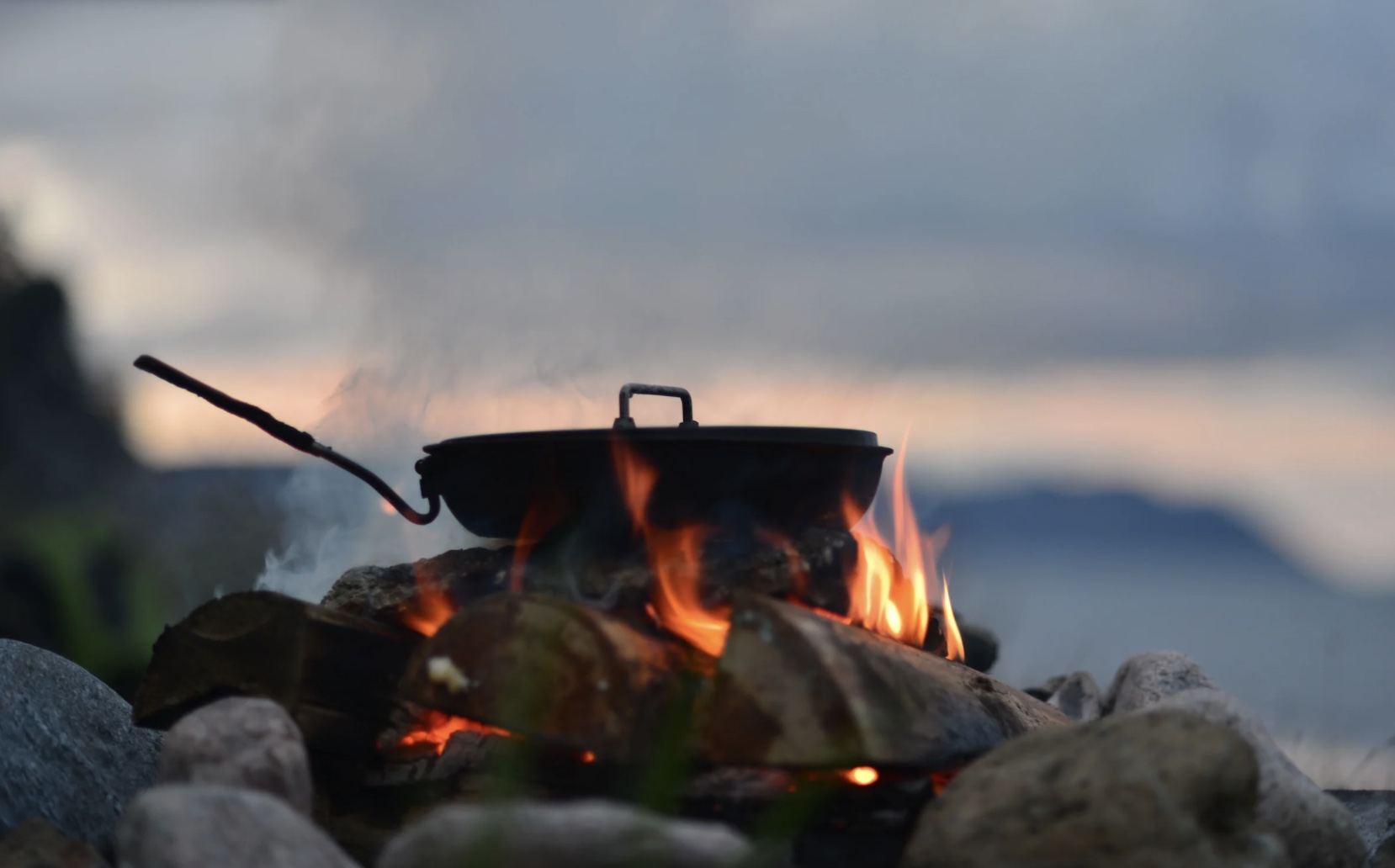
Boil the filtered water using any heat-safe container (such as a tin can) for at least 10 minutes before drinking.
Never Drink
- Urine
- Blood
- Salt or brackish waters
- Sea ice (it’s salty)
- Fish juices
Catching and Preparing Food
Survivors must be open to unconventional food sources. Large quantities aren’t necessary — surviving for months is possible with regular caloric intake, even if modest.
Foods you’ll need to accept eating: insects, worms, fish, snails, shellfish, various grasses and edible plants, nuts, roots, and tubers.
Foods to absolutely avoid: raw meat or fish, unidentified mushrooms, and berries, vegetables, or fruits you cannot positively identify.
Mushrooms and Berries — Key Warnings
Warning: A mushroom you can’t identify is probably going to be the last mushroom you’ll ever eat, because it will kill you. Never eat wild mushrooms unless you are an expert-level identifier.
Berries are less lethal but still risky, potentially causing stomach problems or high fever. If desperate, stick to varieties resembling blackberries, strawberries, and raspberries — but still exercise caution. White berries should never be eaten, and anything resembling blueberries or cherries should also be avoided.
The Edibility Test for Unknown Plants
For unrecognized vegetables, fruits, or berries, follow this step-by-step safety check:
- Smell each part of the plant — discard if it smells bad.
- Touch it and wait about ten minutes — discard if a skin reaction develops.
- Kiss it — discard if your lips start burning.
- Take the tiniest bite — discard if the food tastes soapy or bitter.
- If after an hour you still feel fine, you can eat it.
Safely Obtainable Foods
Fish is the safest and most reliable option. They are easy to catch even without a rod and provide significant calories. While game like rabbit or deer offers more calories, it’s much harder to kill.
Fishing techniques:
- With a line and hook, you can catch most things.
- Without gear, rocks can be arranged into a water tunnel leading fish to a dead end, where they can be grabbed. Striking the water with a stick shocks them briefly, making capture easier.
Trapping small game:
For squirrel, rabbit, or hedgehog, building a simple snare over an animal footpath is recommended. Animal trails are identifiable by beaten paths and feces.
Warning: Never attempt to kill bears, cougars, boars, badgers, alligators, or anything that could easily kill you. Snakes are edible but the risk of being bitten by a venomous species makes decapitation necessary and generally not worth the danger.
Other food sources: Snails are found widely; worms are often found under rolled logs; nuts appear on the ground and in trees; tubers require digging.
Preparing Food
- Always cook meat and fish over a fire.
- Worms can also be cooked — this reduces caloric value but improves taste.
- Do not consume blood — gut and clean fish and game thoroughly before cooking.
Disposing of Remains
After cooking, dig a deep hole far from camp and bury all remains. The smell of food waste can attract predators, which you want kept away from your campsite.
Fire Building
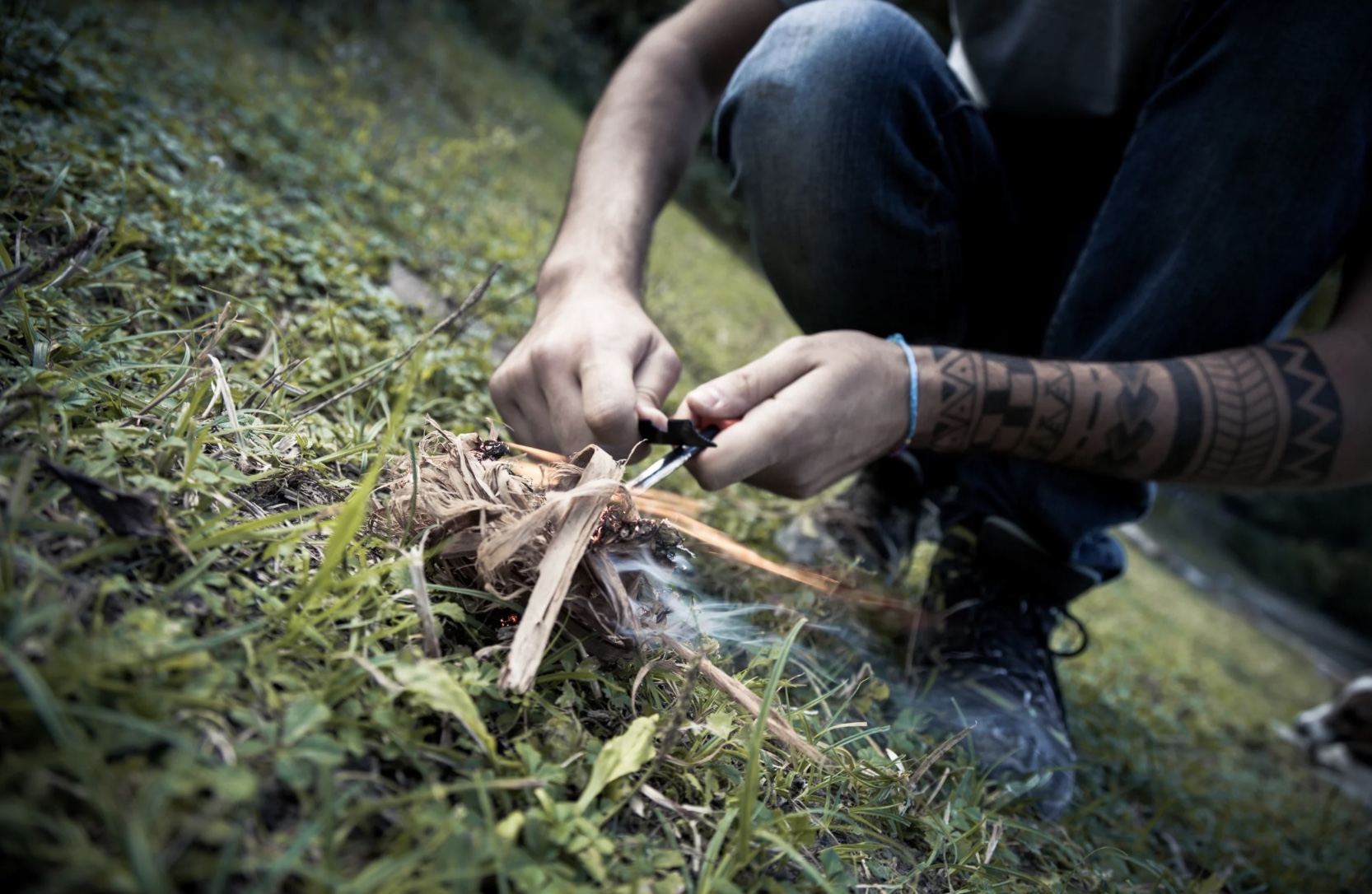
Fire serves essential purposes: warmth, plus food and water preparation. Choose a fire spot near your sleeping area for nighttime warmth.
The recommended method involves gathering dry leaves, grasses, bark, and twigs, layering them in that order. A small pyramid of larger twigs and sticks is built above these materials. Once ignited, larger branches are added to sustain the flame.
Starting a Fire Without Conventional Tools
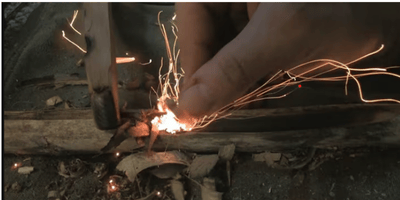
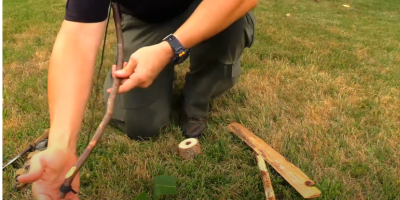
Without a lighter, matches, flint, gunpowder, or string, a fire plough is essentially the only option. This involves cutting a groove into flat wood, placing dry grasses at one end, and ploughing a stick back and forth along the groove. This is very tiring and painful and can take up to an hour. The friction eventually produces tinder to ignite the grasses and start the fire.
Tip: Military survivalist Alex Coker demonstrates two fire-starting techniques: the fire plow (using only a knife as an additional tool) and the bow drill method (which unlike the fire plough requires a string or piece of twine).
Finding Your Way Out
Strongly recommended: inform a reliable person of your route before any hike or camping trip, with instructions to call emergency services if you don’t check in on time.
If Someone Knows Your Route
Stay near the location where you first realized you were lost. Rescue teams will search your planned route and surrounding areas. If you spot rescuers first, shout or use a whistle. A large fire with fresh, thick leaves creates smoke useful for signaling. For helicopters, move to open fields and wave brightly-colored clothing — red is identified as ideal.
If Rescue Hasn’t Arrived
After a reasonable wait (days to weeks depending on route complexity), self-rescue may be necessary. However, move immediately if in danger — such as being in a predator’s territory, facing rising waters, or caught in a snowstorm. Conversely, avoid moving during bad weather, nighttime, or when tired or sick.
Self-rescue tips:
- Look for existing trails in the woods, which indicate human activity
- Walk downhill and near water, since settlements tend to be in valleys near water sources
- Mark every decision point (e.g., rock piles) to enable backtracking if needed
- Move camp progressively downhill and downstream while watching and listening for signs of settlements
Mental Health
Warning: Being stranded alone is psychologically devastating. You must stay positive and believe that you’ll find help in order to survive. People have survived months in the wild — take encouragement from that.
Essential Gear Checklist
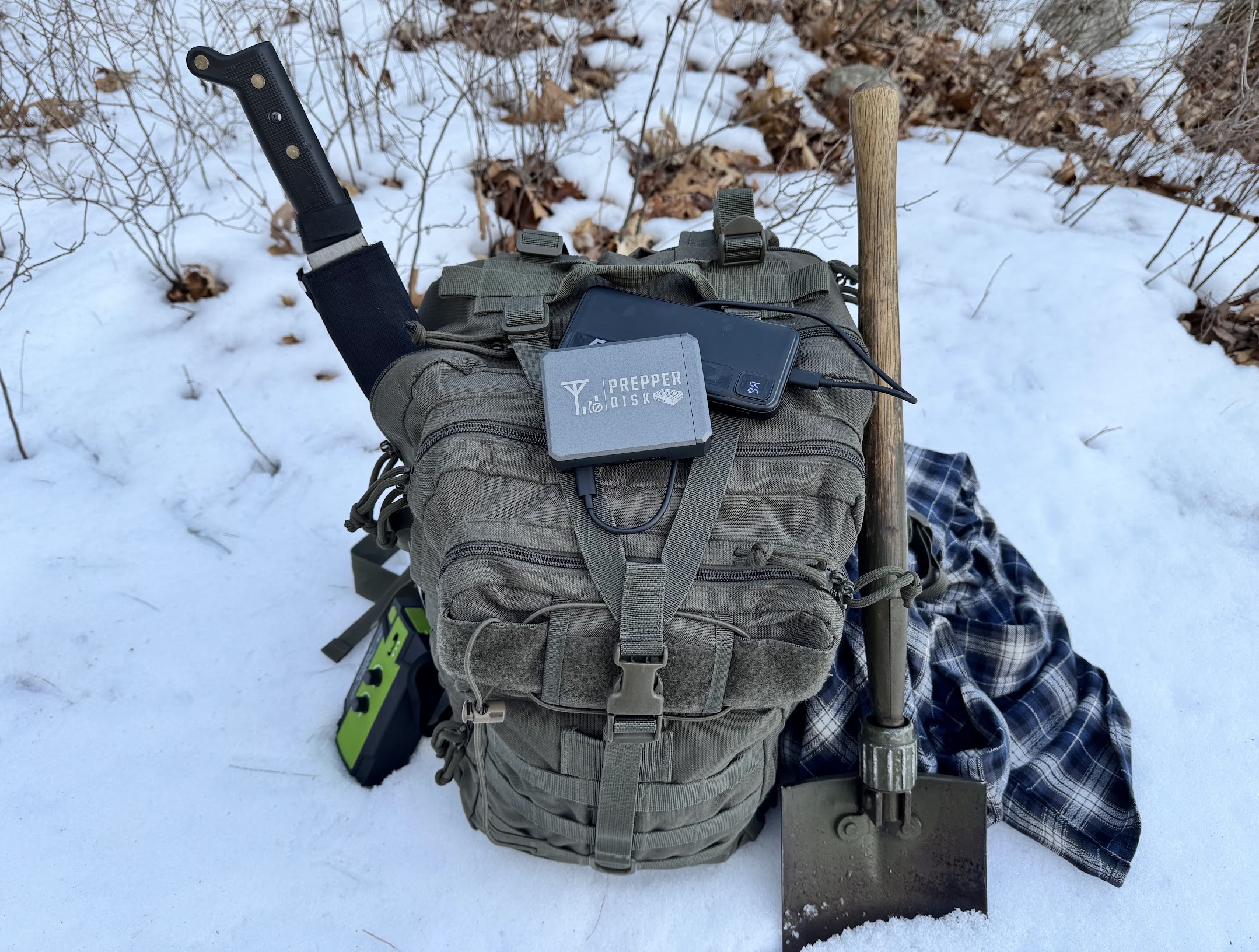
These items will prove invaluable if you become lost:
- A knife or blade
- A water filter
- A lighter and flint
- Paracord
- A shovel
- Fishing line and a hook
- A whistle
- A large piece of red cloth (used for signaling)
- A fully charged cellphone or device
- A compass
- A physical map of the local area (trail map)
- A Prepper Disk
How to Not Get Lost in the First Place
The best survival strategy is prevention — avoiding getting lost entirely. Four key steps:
- Plan your trip ahead — know your starting point, finishing point, and everything in between.
- Memorize the general heading of your trip (North, South, East, West).
- Make mental notes of landmarks you observe while hiking, such as mountain ranges, waterfalls, and bodies of water.
- Recognize early when you’re losing your sense of direction, then turn back and head home.
Military Veteran & Survival Expert
Croatian journalist and military veteran with experience in the Croatian Armed Forces Artillery Reconnaissance unit. Trained in navigation, first aid, shelter building, and wilderness survival.